Uganda holds National Workshop on Trade and LDC Graduation, Forging a Resilient Path.
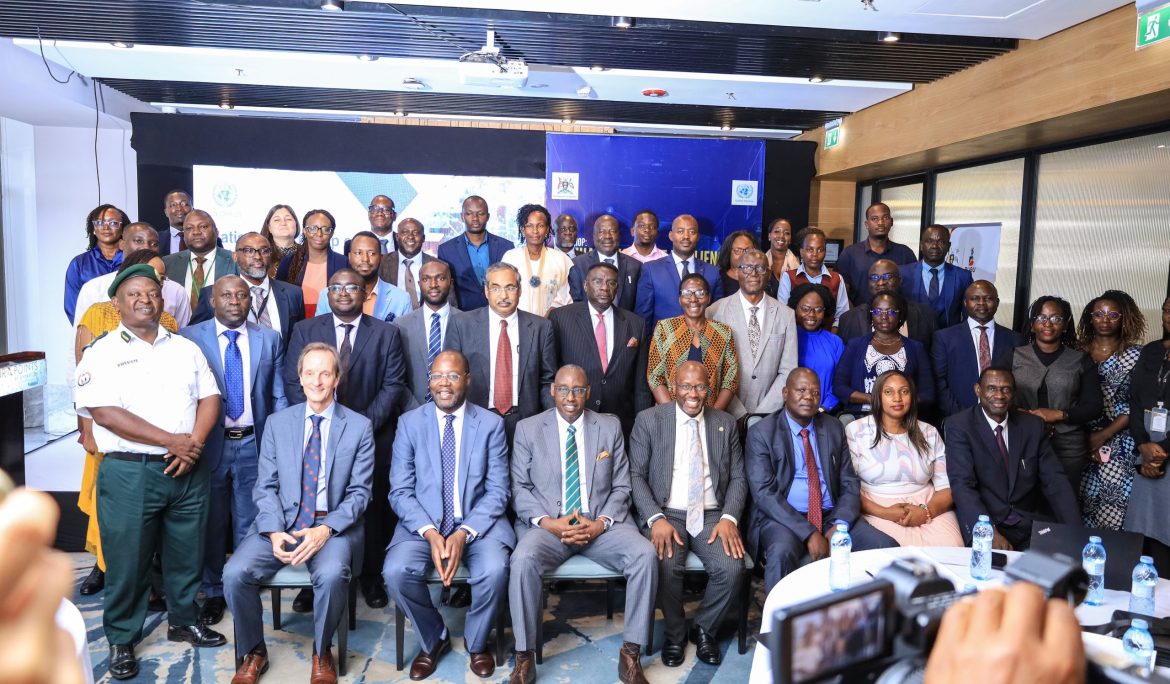
The Ministry of Trade, Industry and Cooperatives (MTIC), in partnership with the Ministry of Finance, Planning and Economic Development, and the United Nations, successfully concluded a landmark two-day National Workshop on Enhancing Trade Resilience. The event, held at Four Points by Sheraton Kampala, served as a critical national platform to align government, private sector, development partners, and civil society on a strategic path for Uganda as it advances towards graduation from the Least Developed Country (LDC) category.
The workshop underscored a unified commitment to ensure that Uganda not only meets the criteria for graduation but emerges stronger, more competitive, and resilient in the global marketplace. The discussions provided a clear-eyed assessment of both the opportunities and challenges, culminating in a robust framework for action.
In his keynote address, the Honourable David Bahati, Minister of State for Industry, framed the national imperative. “Uganda is looking not only to meet the graduation criteria but to survive and thrive post-graduation,” he stated. He outlined a clear strategy focused on value addition in key sectors like dairy, beef, coffee, and cassava, and emphasized the importance of strengthening domestic trade through digital innovation and the Buy Uganda, Build Uganda (BUBU) policy. “By 2050, the regional market is expected to grow to approximately 2.5 billion people. This journey will require innovation and unity to position Uganda as a key player in the African Continental Free Trade Area (AfCFTA).”
The workshop featured strong messages of support from international partners. Mr. Roland Mollerus, Chief of the Secretariat of the UN Committee for Development Policy (UN-OHRLLS), provided an overview of the meticulous multi-year graduation process. He emphasized the importance of Uganda preparing a high-quality national report for the upcoming Mid-Term Review of the Doha Programme of Action (DPoA) in 2027, which will be foundational for the global assessment.
Adding a crucial strategic perspective, Dr. Thangavel Palanivel, Senior Economic Advisor at UNDP Uganda, highlighted the dual nature of graduation. He warned of the potential “loss of trade preferences and reduced concessional financing,” using regional examples to illustrate the point. His solution was a clear call for a “proactive Smooth Transition Strategy” to manage the shift and mitigate risks, ensuring that graduation leads to sustainable development gains.
Across multiple panels, experts and practitioners translated high-level strategy into practical realities:
- On Standards and Quality: Ms. Patricia Bageine Ejalu, Deputy Executive Director of the Uganda National Bureau of Standards (UNBS), announced concrete steps to ease trade, stating, “We are harmonizing standards with the EAC and have launched a digital conformity mark for faster, cheaper certification, slashing audit times for our vital MSMEs.”
- On Logistics and Infrastructure: Mr. Lino Icila, Secretary General of the Uganda Clearing and Forwarders Association, highlighted persistent barriers, calling for greater private sector consultation. He acknowledged the progress of digital systems like the Electronic Single Window but stressed that “robust physical infrastructure and consistent trade facilitation are vital” for unlocking Uganda’s logistics potential.
- On Digital Trade: Mr. Christian Wamambe Mayeku, Country Director for SafeBoda Uganda, highlighted how platforms provide market access and last-mile distribution. He pointed to the need for a “coalition of regulators” to streamline the process for digital companies operating in the physical world.
- On Empowering Women in Trade: Ms. Connie Kihembo, CEO of the Uganda Women Entrepreneurs Association Limited (UWEAL), powerfully advocated for a seat at the table. “We need dedicated women’s incubation centres to turn innovations into industries. This is non-negotiable for empowering women-led industrialization in East Africa.”
The workshop closed with a firm commitment from the Government of Uganda, delivered by Ambassador Henry Mayega, representing the Ministry of Foreign Affairs. He assured participants that the government would not only note the recommendations but “adopt and implement” them, mobilizing its diplomatic missions abroad to attract investment and foster trade.
The conclusion of the workshop is not an end, but a beginning. The clear next steps for Uganda’s graduation journey are:
- Finalize a Smooth Transition Strategy (STS): A comprehensive, nationally owned plan to manage the loss of LDC benefits and leverage new opportunities must be developed and resourced.
- Accelerate Value Addition and Diversification: Policy and incentives must be aggressively directed towards moving up the value chain in agriculture, light manufacturing, and services.
- Deepen Regional Integration: Uganda must fully leverage the AfCFTA and EAC by removing non-tariff barriers, harmonizing standards, and improving cross-border infrastructure.
- Bridge the Digital Divide: Continued investment in digital infrastructure and skills is essential to enable SMEs to participate in e-commerce and digital trade.
- Strengthen Public-Private Dialogue: The collaboration witnessed at the workshop must be institutionalized to ensure policies are practical and effectively implemented.
The National Workshop has set a definitive direction. With a clear roadmap and a spirit of collective action, Uganda is poised to navigate its graduation journey successfully, transforming a symbolic achievement into tangible, inclusive economic growth for all its citizens.