Uganda Embarks on Historic Policy Review to Fuel MSME Growth and National Competitiveness
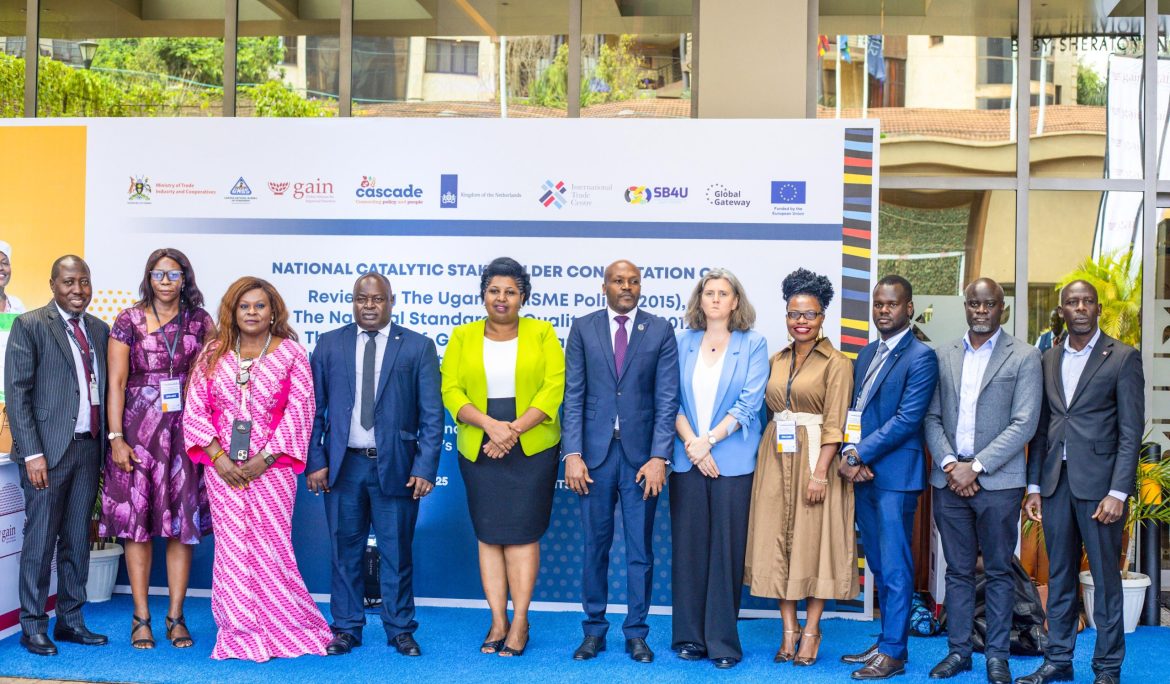
KAMPALA – In a landmark move to accelerate Uganda’s journey toward a USD 500 billion economy, the Ministry of Trade, Industry and Cooperatives (MTIC) has officially launched the comprehensive review of two cornerstone policies: the Micro, Small and Medium Enterprises (MSME) Policy (2015) and The National Standards & Quality Policy (2012).
The launch, which also featured the introduction of the Good Governance Guide for Uganda’s Quality Infrastructure Institutions, was held on Tuesday, 2nd December 2025, at the Four Points by Sheraton Hotel in Kampala. The event was co-hosted by the Global Alliance for Improved Nutrition (GAIN) Uganda, marking a strong partnership for national development.
Under the theme “Co-Designing Inclusive and Demand-Driven Policies for Uganda’s Tenfold Growth Transformation,” the National Catalytic Stakeholder Consultation brought together government officials, private sector leaders, development partners, MSME representatives, and academia to chart a new course for Uganda’s economic future.
Speaking on behalf of the Minister of State for Trade, Hon. Gen. Wilson Mbasu Mbadi, Under Secretary Mr. Deogratious Masagazi launched the review process and set a clear vision for the process.
“MSMEs form 98.8% of Uganda’s enterprises, contribute 75% of our GDP, and generate over 80% of domestic revenue. They are the backbone of our economy and the engine of future industrialization,” Masagazi stated. “However, persistent challenges in finance, productivity, innovation, and standards compliance, coupled with outdated policies, hinder their potential. This review is therefore not an option, but a necessity for achieving our Tenfold Growth Strategy. We are here to co-create modern, responsive policies that will anchor Uganda’s enterprise development for the next decade.”
Ms. Damali Ssali, Country Director of GAIN Uganda, reinforced her organization’s commitment as a key co-host and partner. “Addressing these policies is key to shaping actionable efforts. GAIN is proud to support this process, bringing our expertise in food systems, trade, and standards to strengthen MSME competitiveness,” she said. “We believe policies work best when the users—the MSMEs—are involved in their design from the start. This is the future of smart, effective policymaking in Uganda.”
The consultation received a significant boost with the announcement of a major European Union investment. Ms. Michelle Walsh, Head of the Green Transition and Private Sector Delegation at the EU Mission in Uganda, unveiled a €1.4 billion (approximately UGX 5.9 trillion) investment package under the Team Europe Sustainable Business for Uganda initiative.
“The European Union is very pleased to partner with Uganda to promote competitiveness in international markets and expand opportunities for entrepreneurs,” Walsh stated. She outlined that the funding would focus on key constraints faced by businesses, including access to finance through targeted facilities, upgrading productive and energy infrastructure, skills development for youth, and strengthening compliance with international standards to unlock market access.
Eng. James Kasigwa, Executive Director of the Uganda National Bureau of Standards (UNBS), explained the technical importance of the review. “This process will transform our National Quality Infrastructure—the ecosystem of standardization, metrology, testing, and accreditation,” Kasigwa said. “A robust, well-governed quality infrastructure is the bedrock for product safety, consumer trust, and access to regional markets like the AfCFTA. The launch of the Good Governance Guide today is a decisive step towards a transparent and high-performing quality ecosystem.”
Commissioner Joram Patrick Mugisha of the Department of Business Development and Quality Assurance (BDQA)—the department leading the review—emphasized the transformative participatory approach. “Inclusive policymaking is smart policymaking. This consultation represents a new model where we listen first, then act,” he stated. “We are moving away from validating pre-written documents to genuinely co-creating with the beneficiaries. Together, let’s build policies that reflect what businesses truly need to thrive.”
Stakeholders welcomed the review as a timely intervention. Ms. Sarah Kagingo, Vice Chairman of the Private Sector Foundation Uganda (PSFU), highlighted the need for the revised policies to address technological disruption and sound governance. “As we review, we must integrate forward-looking elements that help businesses navigate future risks and operate intelligently,” she said.
Why a Review is Critical Now
A decade after their formulation, the global and regional landscape has transformed dramatically. New opportunities and challenges—from the African Continental Free Trade Area (AfCFTA) and the EAC Industrialization Strategy to the digital revolution and climate imperatives—demand policies that are agile, forward-looking, and responsive. In addition to that, the national development goals too require an uprage in these policies—looking at NDPIV and the 10 fold growth strategy.
Launch of the Good Governance Guide
Alongside the policy review launch, stakeholders introduced the Good Governance Guide for Uganda’s Quality Infrastructure Institutions. This guide provides a critical framework to enhance transparency, accountability, and high performance across all institutions responsible for standards, measurements, and quality assurance.
The launch event, bolstered by significant international partnership commitments, is the first step in a year-long, inclusive review process. It sets the stage for widespread national consultations, technical working group sessions, and rigorous drafting, aiming to produce modernized, dynamic policies ready to propel Ugandan businesses onto the regional and global stage.
The Ministry of Trade, Industry and Cooperatives invites all stakeholders to actively engage in this co-creation journey, ensuring that the resulting policies are truly by the people, for the people, and for Uganda’s prosperity.